Nuclear Engineering
A Warning That Must Last Ten Thousand Years
Nuclear waste will remain lethal long after every language spoken today has gone extinct. The most unsettling engineering problem of our era isn't technical. It's semiotic.
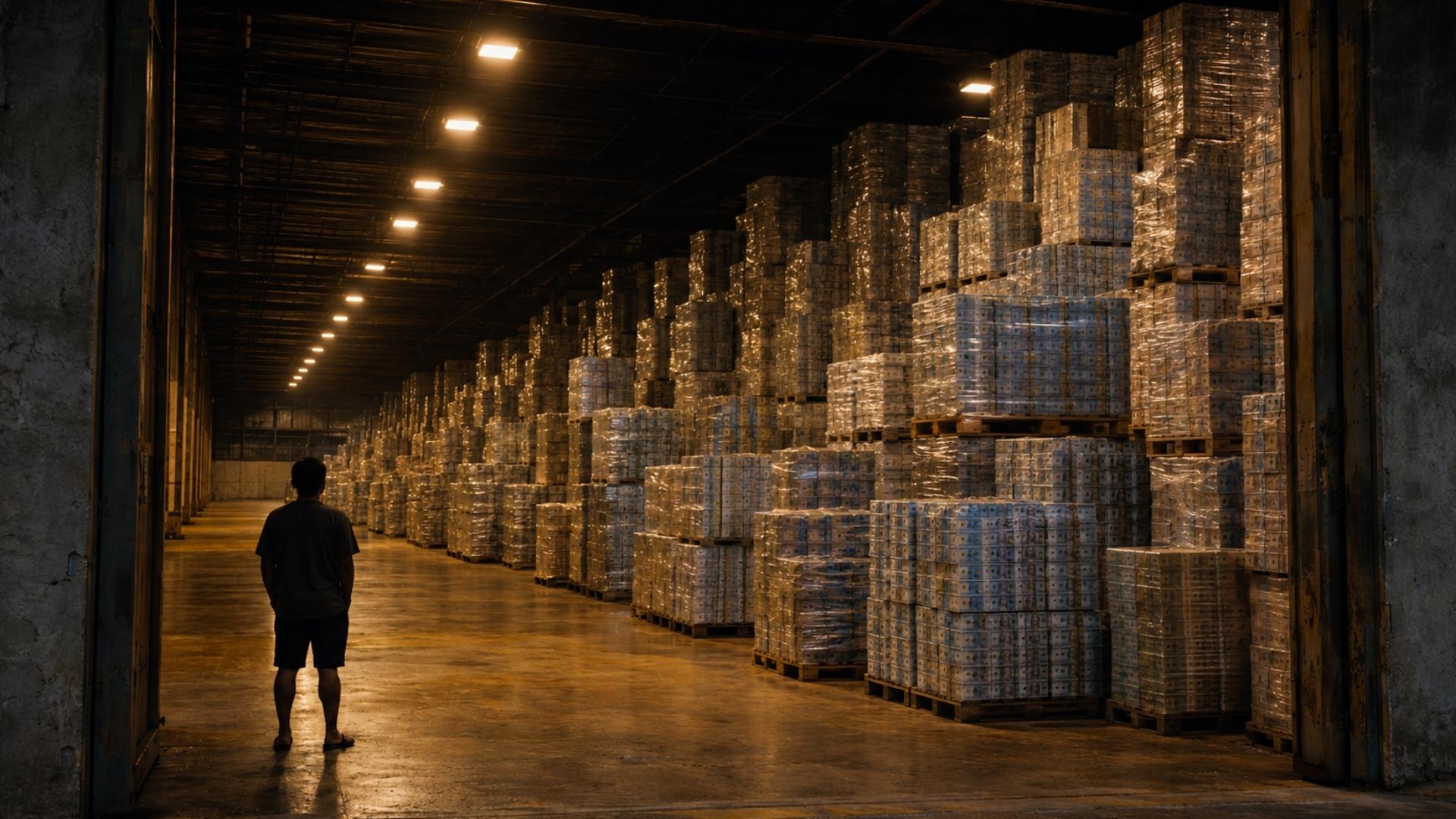
Somewhere in the Chihuahuan Desert, 655 meters underground, there is a room sealed with concrete and salt. Inside it: drums of plutonium-contaminated waste from decades of American nuclear weapons production. The facility is called the Waste Isolation Pilot Plant (WIPP), and it will remain dangerous for roughly 10,000 years.
The engineers and government officials who built it were tasked with one of the strangest design problems in history: how do you warn people who haven't been born yet?
Not their grandchildren. Not their great-grandchildren. People separated from us by a gulf of time as large as the one between us and the construction of Stonehenge. People who may speak no language we would recognize, worship nothing we would understand, and live in a civilization shaped by forces we cannot imagine.
The engineers got the containment part right. The waste is sealed, monitored, geologically stable. That problem, the hard physics of isolation, was solvable. The problem that remained was almost philosophical in nature, but with very real engineering consequences: how do you design a message that outlasts its messenger?
What 10,000 Years Actually Means
Before we get to the solutions, we need to sit with the scale. As we've explored before in this newsletter, scale is something human brains resist. Ten thousand years is not "a long time." It's a specific, staggering number.
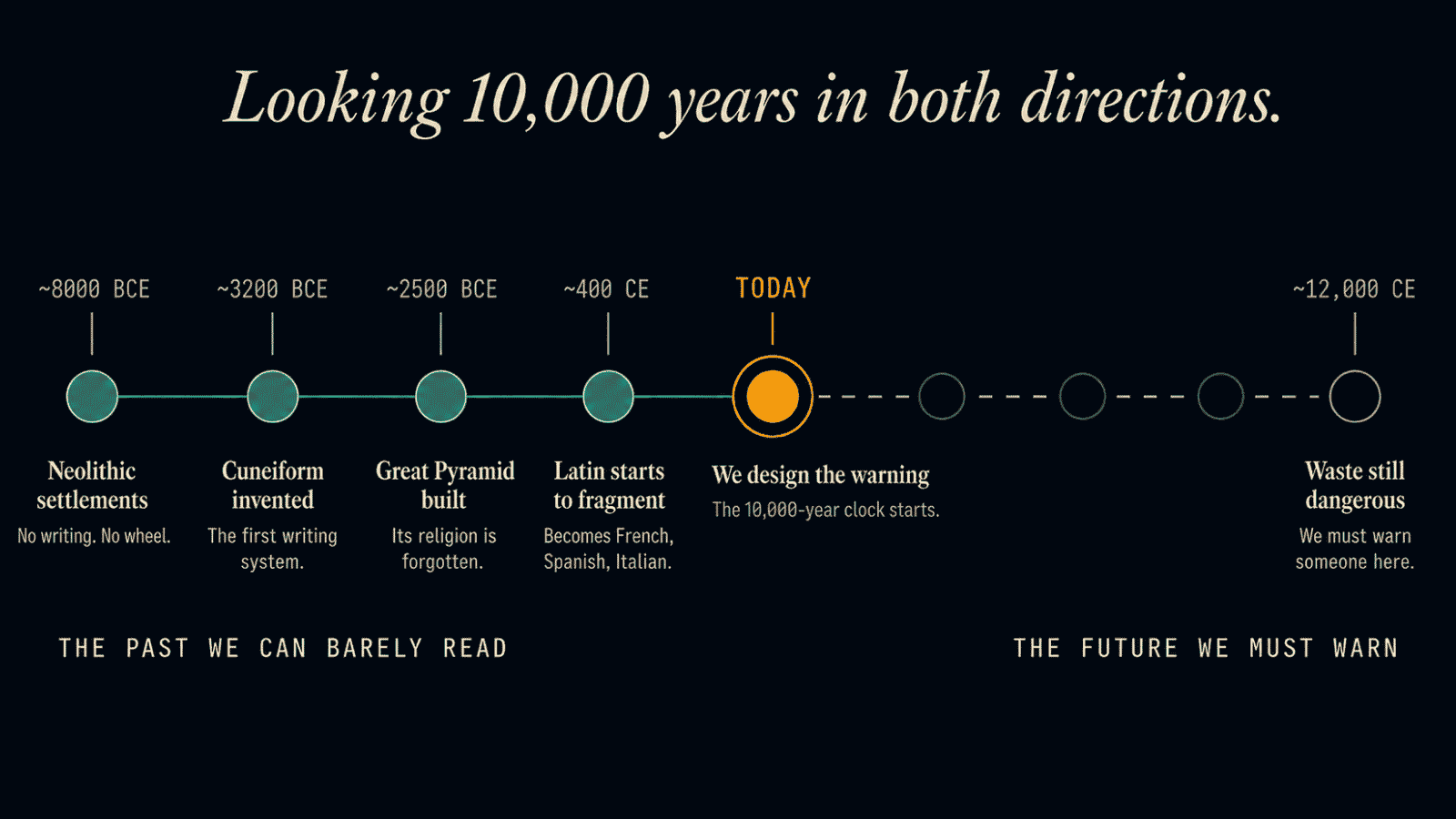
Looking back exactly 10,000 years from today:
- ~8,000 BCE — Neolithic settlements. Agriculture is established but writing hasn't been invented. The wheel won't appear for another four millennia.
- ~3,200 BCE — Cuneiform invented. Sumerian cuneiform appears, the first writing system. We can barely read it today, and it's only ~5,000 years old.
- ~2,500 BCE — Great Pyramid built. The Great Pyramid of Giza is constructed. Still standing, but the civilization that built it is gone and its religious context is largely lost.
- ~400 CE — Latin begins to fragment. The language of Rome starts splitting into what will become Italian, French, Spanish, Portuguese. Languages we think of as "old" are actually very recent.
- Today — We design the warning. The 10,000-year hazard clock starts now. We have to warn whoever lives here in ~12,000 CE: a span equal to everything above, again, into the future.
Latin is only 2,000 years old and already requires specialists to read. Proto-Indo-European, the common ancestor of half the world's languages, was spoken roughly 6,000 years ago and is entirely reconstructed guesswork. No natural human language has maintained continuity of meaning across 10,000 years. Not one.
The task is not to build a stronger fence. It is to communicate across a chasm of time that swallows languages, civilizations, and the very concept of continuity.
— U.S. Department of Energy, Expert Judgment on Markers to Deter Inadvertent Human Intrusion, 1993 (paraphrased)
What Experts Actually Proposed
Across two efforts spanning the early 1980s and early 1990s, the U.S. government assembled teams unlike any that had ever been convened for an engineering project. The first, the Human Interference Task Force (1981–1984), brought together linguists, semioticians, and anthropologists under the Office of Nuclear Waste Isolation. The second, a panel commissioned by Sandia National Laboratories (1991–1993), added architects, materials scientists, astronomers, and artists. Together, their mandate was to design a warning system that could survive civilizational collapse. The proposals they generated are worth dwelling on, not just for their ingenuity, but for what they reveal about how difficult this class of problem actually is.
The Spike Field
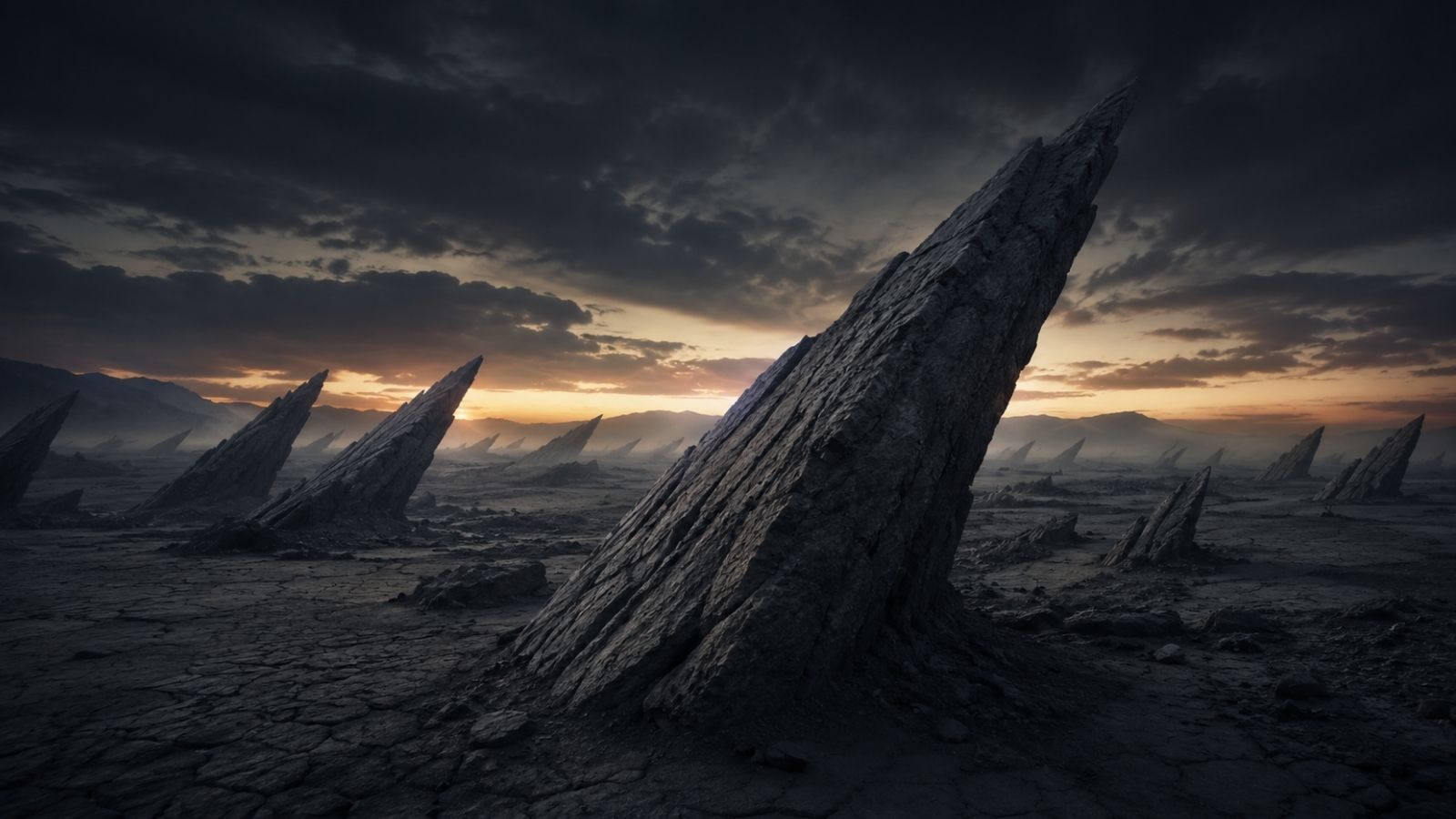
One team proposed a landscape of massive granite spikes, angled outward, covering the entire site. No words. No symbols. Just a physical environment designed to feel viscerally, instinctively wrong.
The hypothesis was that danger-aversion to sharp forms might be more cross-culturally stable than any linguistic symbol. The approach drew from evolutionary psychology: we don't need to be taught that a field of spikes is threatening. But critics noted that future civilizations might interpret the spikes as sacred objects, since temples are full of obelisks, or as mineral resources worth mining.
The Landscape of Thorns
Another proposal from the same panel involved massive concrete forms resembling thorns or craters, a deliberate aesthetic of hostility. The goal was to encode meaning through form: this is not a place of beauty. This is not a place of shelter. This space repels. Architecture as a warning.
The Atomic Priesthood
Perhaps the most radical idea came from linguist Thomas Sebeok, in a 1984 report for the earlier Human Interference Task Force. He proposed creating a relay system: a quasi-religious institution, like the Catholic Church, that would maintain and transmit knowledge of the danger across generations. He called it an "atomic priesthood," encoding the knowledge in myth and ritual, gradually updated as languages evolved.
Sebeok was drawing on the observation that religious institutions had successfully transmitted certain core messages across millennia in ways that purely documentary approaches had not.
The Rosetta Stone problem. The Rosetta Stone was decipherable only because it contained the same text in three scripts, including one (Greek) that scholars already knew. Any single-language warning we leave will eventually become as unreadable as Linear A, the Minoan script that remains undeciphered to this day.
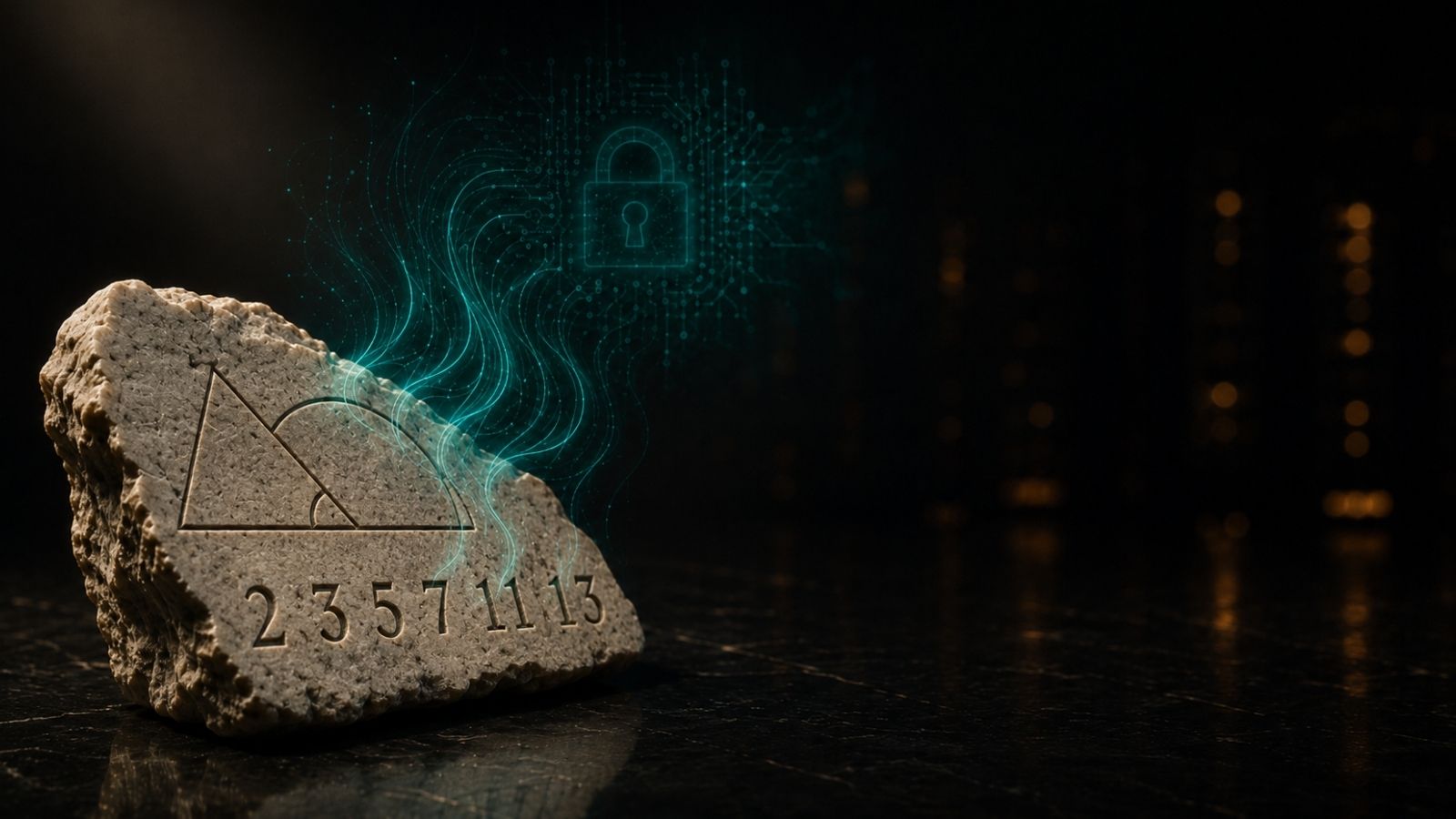
The Sandia team eventually recommended a redundant, layered approach: monuments, buried records, multiple languages, pictograms. No single channel could be trusted, but a combination of all of them might survive.
Biologically Engineered "Ray Cats"

In a 1984 proposal so strange it almost reads as satire, except it was serious, semioticians Françoise Bastide and Paolo Fabbri suggested genetically engineering cats to glow or change color in the presence of radiation, then embedding in folklore the meaning of their reaction. A living, self-replicating warning system.
The accompanying proposal was to create folk songs and legends encoding the message: "if the cat glows, flee." The biological continuity of the cat population would be more reliable than any monument. The DOE never formally adopted the idea. It never quite dismissed it either.
What This Tells Us About Designing at Scale
If you're an engineer, the WIPP warning problem isn't just a curiosity. It's a boundary case that illuminates something important about how we approach long-horizon systems design, and how badly our standard toolbox fits when the timescales extend beyond a few decades.
Documentation rot is a real failure mode
Every software engineer who has inherited a codebase older than 10 years knows this intuitively. Comments lie. Wikis go stale. The person who understood the original intent left the company in 2011.
Now scale that problem by a factor of 500. The WIPP case is an extreme version of a problem that affects every system designed to outlast its designers. The failure mode is not hardware degradation; the concrete and steel might last fine. The failure mode is the loss of the mental model that makes the hardware make sense.
Redundancy of channels, not just redundancy of copies
The team's eventual recommendation was layered: pictograms, multiple languages, buried records, physical monuments, surface markers. That's a textbook example of a principle that applies broadly in critical systems. Don't just make more copies of the same channel; diversify the channel type.
A message stored only in text is vulnerable to linguistic drift. A message stored only in symbols is vulnerable to reinterpretation. A message stored only in physical form is vulnerable to erosion. The combination of all three is more durable than any one of them.
The expert panel itself was the most important output
Here's the part that rarely gets discussed: the Sandia expert panel spent years deliberating, and their primary recommendation was not a monument design. It was a process: an ongoing, institutionalized effort to periodically revisit the markers, update the languages, and adapt the warning as human communication evolves. In other words, the most robust solution to a very long-horizon design problem was to accept that no fixed design could be trusted, and to instead design for adaptability. The marker itself becomes a living system, not a static artifact.
That's counterintuitive to engineering instinct, which tends to favor definitive solutions. But for problems on long enough timescales, the definitive solution often has a shorter shelf life than the iterative process it replaced.
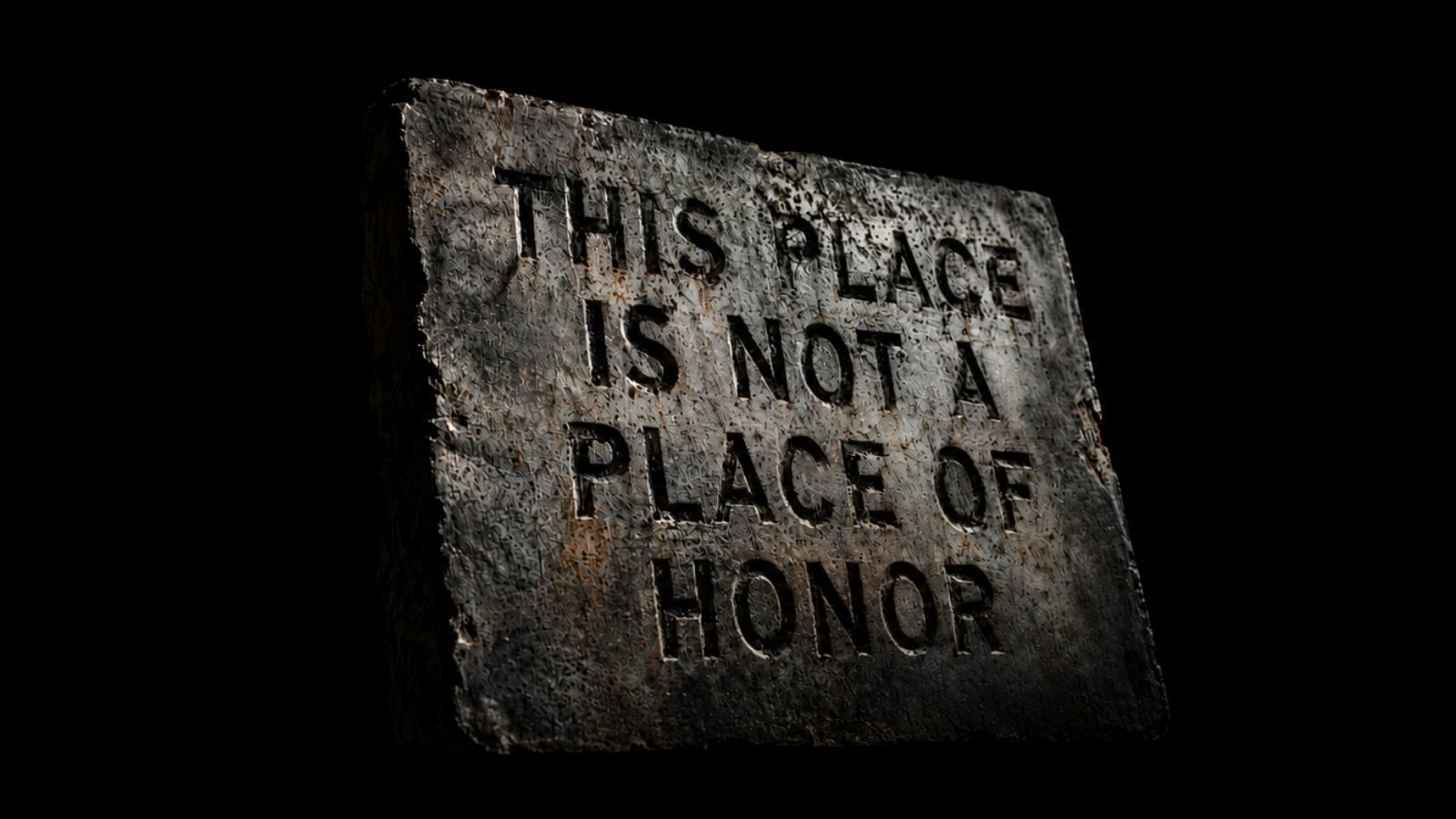
This place is not a place of honor. No highly esteemed deed is commemorated here. Nothing valued is here. What is here is dangerous and repulsive to us. This message is a warning about danger. The danger is still present, in your time, as it was in ours.
— Proposed inscription for the WIPP site, Expert Judgment on Markers to Deter Inadvertent Human Intrusion, 1993
The Real Lesson Is About Humility
The WIPP problem is, at its core, an engineering problem about the limits of design. Most engineering assumes that the context in which a system operates will remain roughly stable: the language its operators speak, the culture that built it, the institutions that maintain it. Nuclear waste storage breaks all of those assumptions simultaneously.
But the nuclear case is just the most extreme version of a spectrum. Infrastructure designed for a 50-year lifespan will be operated by people who weren't born when it was built. Software written in 2005 is already behaving strangely in environments it wasn't designed for. Cities planned around one kind of climate will experience another.
The degree is different. The problem is the same.
Good engineers design for their constraints. Great engineers design for the limits of their knowledge, including the humbling fact that they do not know what they don't know about the future. The WIPP designers couldn't guarantee their warning would work. So they built redundancy, institutionalized review, and accepted that a partly-correct warning system maintained over time was better than a perfectly-correct one fixed in place.
There's a reason the most interesting engineering problems of the next century will be problems of communication, interpretation, and institutional continuity, not just of physics and materials. We have the technical tools to isolate dangerous things. What we're still figuring out is how to make sure the knowledge of why survives the people who built the thing.